 Skip-the-line available
 What to See Inside the Hôtel de la Marine
A room-by-room walk through the intendant's apartments, the state salons, the loggia and the story of the Crown Jewels.
The Hôtel de la Marine packs an extraordinary amount into a compact visit: the private world of an 18th-century royal official, the ceremonial splendour of the state salons, a loggia with one of the best views in Paris, and one of history's great jewel heists. This guide walks you through what you will see, in the order the route takes you, so you know what to look for and where the highlights lie — all experienced through the palace's celebrated 3D audio headset.
The Apartments of the Intendant
The visit's centrepiece is the restored apartment of the intendant of the Garde-Meuble — the official who managed the royal storehouse and lived on site in considerable style. Refurnished with period furniture, textiles, porcelain and everyday objects, the rooms recreate life on the eve of the Revolution: the dining room set for a meal, the salons for receiving guests, the private cabinets and bedchambers, all returned to their original colours, gilding and finishes. It is one of the most complete evocations of 18th-century domestic life in Paris.
The detail is what makes it: laid tables, lit-looking fires, personal objects and the sense of rooms just vacated, all narrated by the geolocated headset that plays the household's voices and sounds around you. Rather than a roped-off museum, it feels like stepping into an inhabited home, and it is here that the Hôtel de la Marine's restoration is at its most immersive and convincing.
The State Salons and the Grand Décor
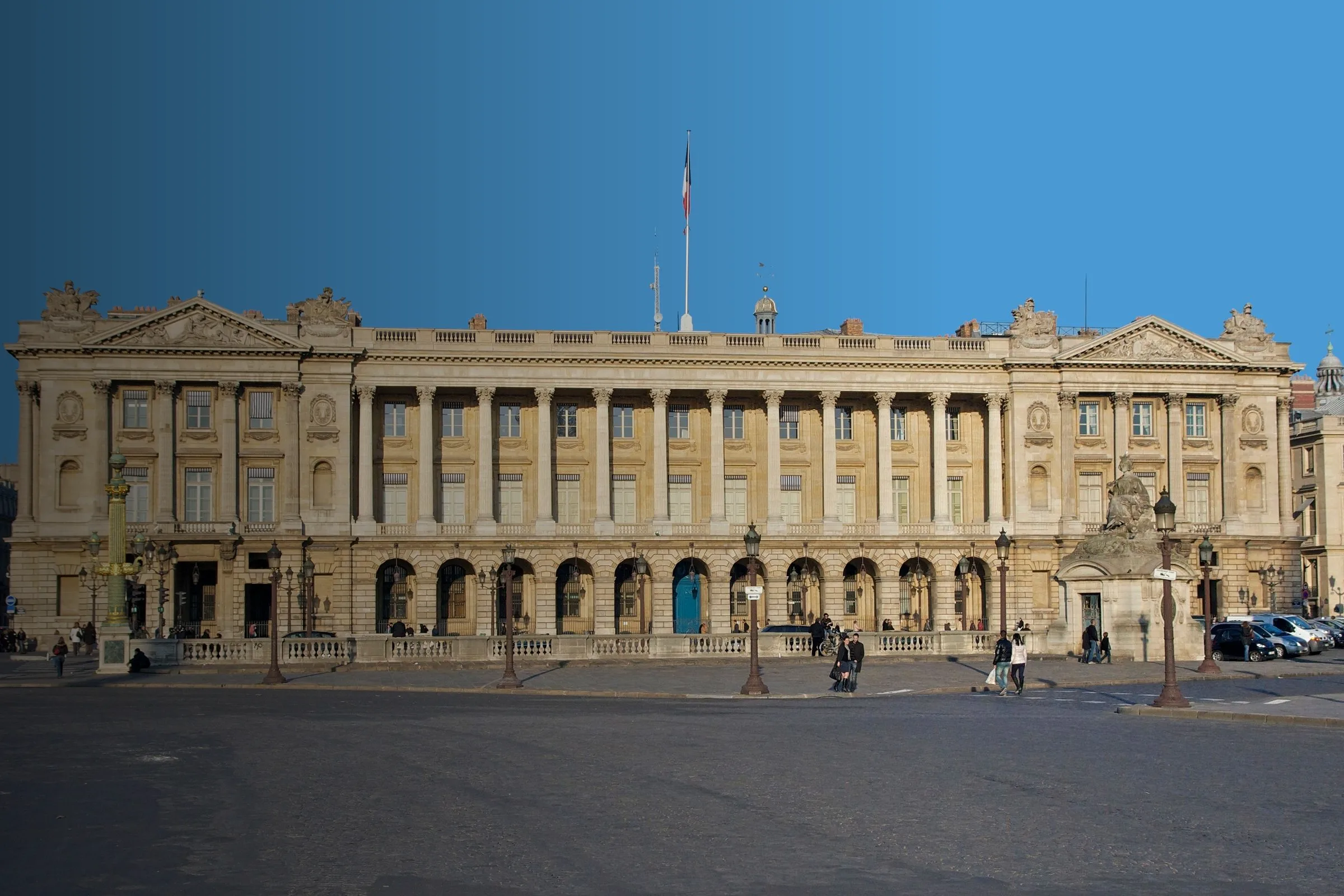
Beyond the private apartment lie the salons d'apparat — the grand reception rooms along the façade, restored to their full gilded glory. Tall windows, mirrors, parquet floors, carved boiseries and stucco ceilings recall the ceremonial life of the institution and the taste of the age. These were the spaces for display and reception, and their scale and finish are a deliberate contrast to the intimacy of the intendant's rooms.
The salons look out over the Place de la Concorde, so the light through their windows changes the mood through the day, at its richest in the afternoon. The audio headset continues here, adding music and voices that summon the receptions once held in these rooms. Together the apartments and the salons show the two faces of the palace — private and public, domestic and ceremonial — within a few minutes' walk.
The Loggia over the Place de la Concorde
The route opens out onto the loggia — the colonnaded gallery running the length of the façade, a level above the square. From here the whole Place de la Concorde lies before you: the Luxor obelisk, the fountains, the Tuileries to the east and the Champs-Élysées sweeping up to the Arc de Triomphe, with the Eiffel Tower beyond on a clear day. Reached only from inside the palace, it is one of the great views of central Paris and, for many, the highlight of the visit.
Because the Hôtel de la Marine is far less crowded than the museums nearby, you can pause on the loggia and take it in properly. Late afternoon light is best, and on Friday evenings the view at dusk, with the square lit below, is unforgettable. It is the natural finale to the visit — a moment of open air and panorama after the enclosed richness of the rooms.
The Crown Jewels and the Garde-Meuble Story
Running through the whole visit is the story of the Garde-Meuble itself — the royal institution that conserved and displayed the crown's furniture, arms and jewels, and opened its galleries to the public on set days, an early ancestor of the public museum. Displays and the audio narrative explain how the treasures were kept and shown, and set the scene for the palace's most dramatic episode.
In September 1792 thieves broke into the Garde-Meuble and stole most of the Crown Jewels, including the celebrated Regent Diamond, later recovered and now among the crown jewels in the Louvre. The theft is one of the most famous in history, and the way the visit weaves it into the restored rooms gives this elegant palace an unexpected thread of intrigue that stays with visitors long after they leave.
Frequently asked
What are the main things to see inside?
The restored apartments of the Garde-Meuble intendant, the gilded state salons, and the loggia over the Place de la Concorde — all experienced with the 3D audio headset. The story of the Crown Jewels theft runs throughout.
How long is the route?
The full Grand Tour takes most visitors between 1.5 and 2 hours. It is self-paced, so you can linger in the rooms that interest you most and pause on the loggia for the view.
Is the audio headset really worth using?
Very much so — the geolocated 3D headset is one of the most praised parts of the visit, playing spatial sound keyed to each room so the palace feels inhabited. It is included with the ticket.
Can I see the loggia without the full ticket?
The loggia is reached from inside the palace as part of the visit route, so it is included with the Grand Tour. It is one of the highlights, so it is worth timing your visit for good afternoon light.
Where were the Crown Jewels stolen?
Here, when the palace was the royal Garde-Meuble. In September 1792 thieves stole most of the collection, including the celebrated Regent Diamond, later recovered — a story told through the visit.
Is it suitable for children?
Yes — the visit is the right length and the audio headset, which changes room by room, keeps younger visitors engaged. The jewel-heist story and the grand salons tend to capture their imagination.
Is photography allowed inside?
Yes, for personal use without flash or tripod in most areas. The loggia over the Concorde and the daylit salons are the best subjects; as the route is self-paced you can wait for a room to clear.